Ever feel like your emotional reactions are “too much” or like you’ve completely shut down? You’re not broken—you may be outside your optimal range for emotional regulation and the window of tolerance.
When you’re within your window, you feel present, calm, and capable—even when life gets difficult. When you’re pushed outside of it, you may become overwhelmed, reactive, shut down, or detached.
Learning how to recognise and regulate your nervous system is one of the most important tools for emotional wellbeing, trauma recovery, and long-term mental health.
Let’s explore how it works—and what you can do when you’re outside your window.
What Is Emotional Regulation and the Window of Tolerance?
The Window of Tolerance is your nervous system’s optimal zone.
When you’re inside it, you can:
- Think clearly
- Handle stress without spiraling
- Stay emotionally connected to yourself and others
But when life feels like too much, your system may shift into a survival state. These can include:
Hyperarousal – Fight or Flight
You feel agitated, anxious, angry, or constantly on edge. Your body is in overdrive, reacting to perceived threat.
Dysregulation – That “Something’s Off” Feeling
You’re not fully shut down, but you’re no longer calm either. You might feel jumpy, impatient, unsettled, or emotionally drained.
Hypoarousal – Freeze or Shut Down
You feel flat, numb, exhausted, or emotionally disconnected. Your system has gone into energy conservation mode, trying to protect you from overwhelm.
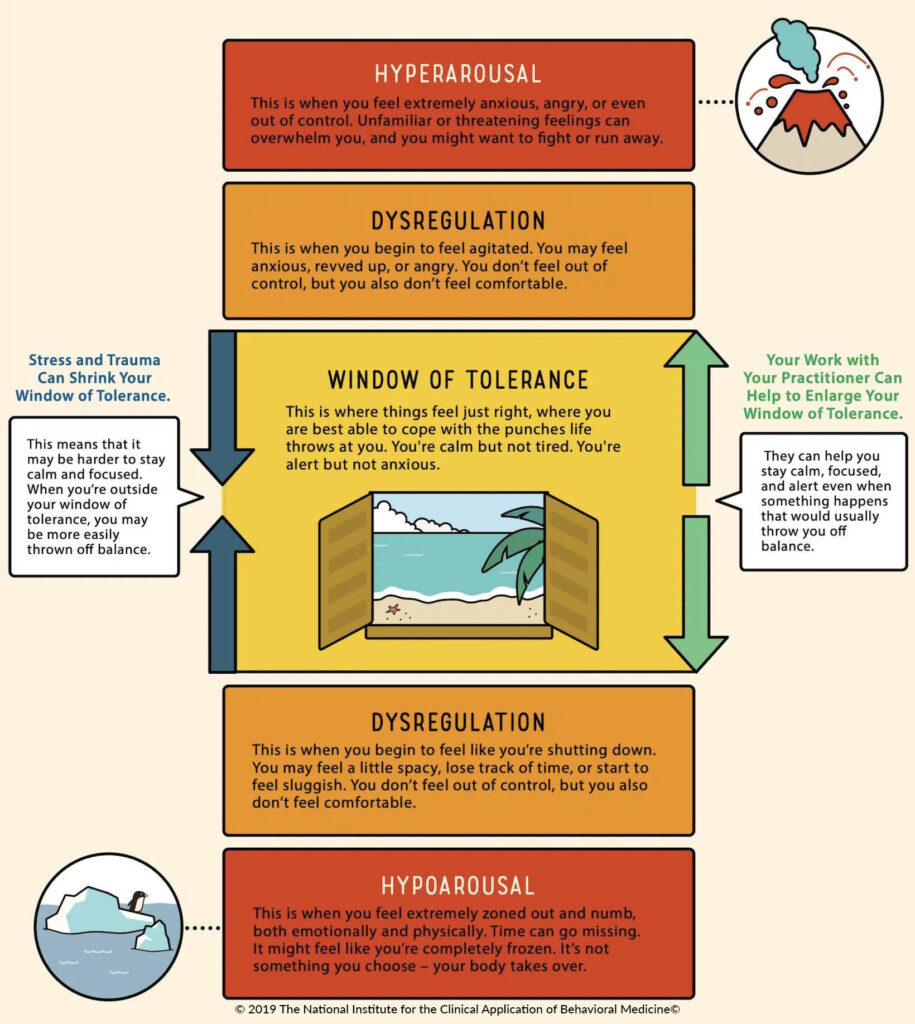
The good news? These states are temporary. Once you know how to recognise and regulate them, you reclaim control over your emotional world.
Hyperarousal: when everything feels too much
Hyperarousal happens when the sympathetic nervous system takes over—preparing you to fight or flee.
This is useful in true danger. But when it becomes chronic, it can drain your mental and physical health.
Signs of hyperarousal:
- Racing thoughts or panic
- Muscle tension or tightness
- Irritability or angry outbursts
- Insomnia or trouble sleeping
- Feeling emotionally overstimulated
- Hypervigilance or jumpiness
- Difficulty concentrating
How to regulate hyperarousal:
- Deep, slow breathing
- Grounding exercises (like 5-4-3-2-1 sensory scan)
- Progressive muscle relaxation
- Quiet time in nature or calming spaces
These tools help signal safety to your body and gently guide you back into your Window of Tolerance.
Hypoarousal: when you feel numb or disconnected
Hypoarousal is governed by the parasympathetic nervous system. It’s your body’s way of shutting down in response to extreme stress.
This state can feel like emotional numbness, brain fog, or an inability to act—even when you want to.
Signs of hypoarousal:
- Fatigue or low energy
- Disconnection from emotions or surroundings
- Slowed thinking or difficulty speaking
- Apathy or sense of hopelessness
- Heavy limbs or collapsed posture
- Loss of interest or motivation
How to re-engage your system:
- Gentle physical movement (like walking or stretching)
- Cold water on the face or hands
- Sensory stimulation (music, scent, texture)
- Talking to a safe, supportive person
The goal isn’t to “snap out of it,” but to gradually bring awareness back to your body and reconnect with the present moment.
Why Emotional Regulation and the Window of Tolerance Matter
When you can recognise where your nervous system is, you can respond intentionally—instead of reacting automatically.
Understanding the Window of Tolerance allows you to:
Respond instead of react
Build emotional and nervous system resilience
Stop cycles of emotional burnout
Create more emotional balance in your day-to-day life
This work is foundational for trauma recovery, anxiety management, and emotional growth. This isn’t about forcing yourself to feel “better.”
It’s about learning to work with your nervous system—not against it.
You Can Return to Balance—Again and Again
At Embodied Harmony, we work with clients to support nervous system regulation, emotional awareness, and emotional resilience.
Whether you’re moving through trauma, burnout, or just trying to feel like yourself again—this work creates real, lasting change. You don’t have to stay stuck in survival mode.
Let’s explore how your nervous system can become your greatest ally—not your enemy.

Prioritise Your
Mental & EMOTIONAL
wellbeing
Therapy is a personal journey – and finding the right support matters. If you’re curious about working together, you’re invited to book a complimentary, no-obligation consultation. It’s a gentle first step to ask questions, explore your needs, and see if our approach aligns with what you are looking for.
No pressure. No commitments. Just space to connect.